Embedded Software Engineering
We deliver embedded software development services across 8-bit to 64-bit MCU and MPU platforms, covering firmware architecture, board bring-up, hardware abstraction, RTOS integration, embedded Linux enablement, cloud-connected edge computing, and operator-facing HMIs. Every engagement is shaped around the performance, power, safety, and maintainability needs of the product.
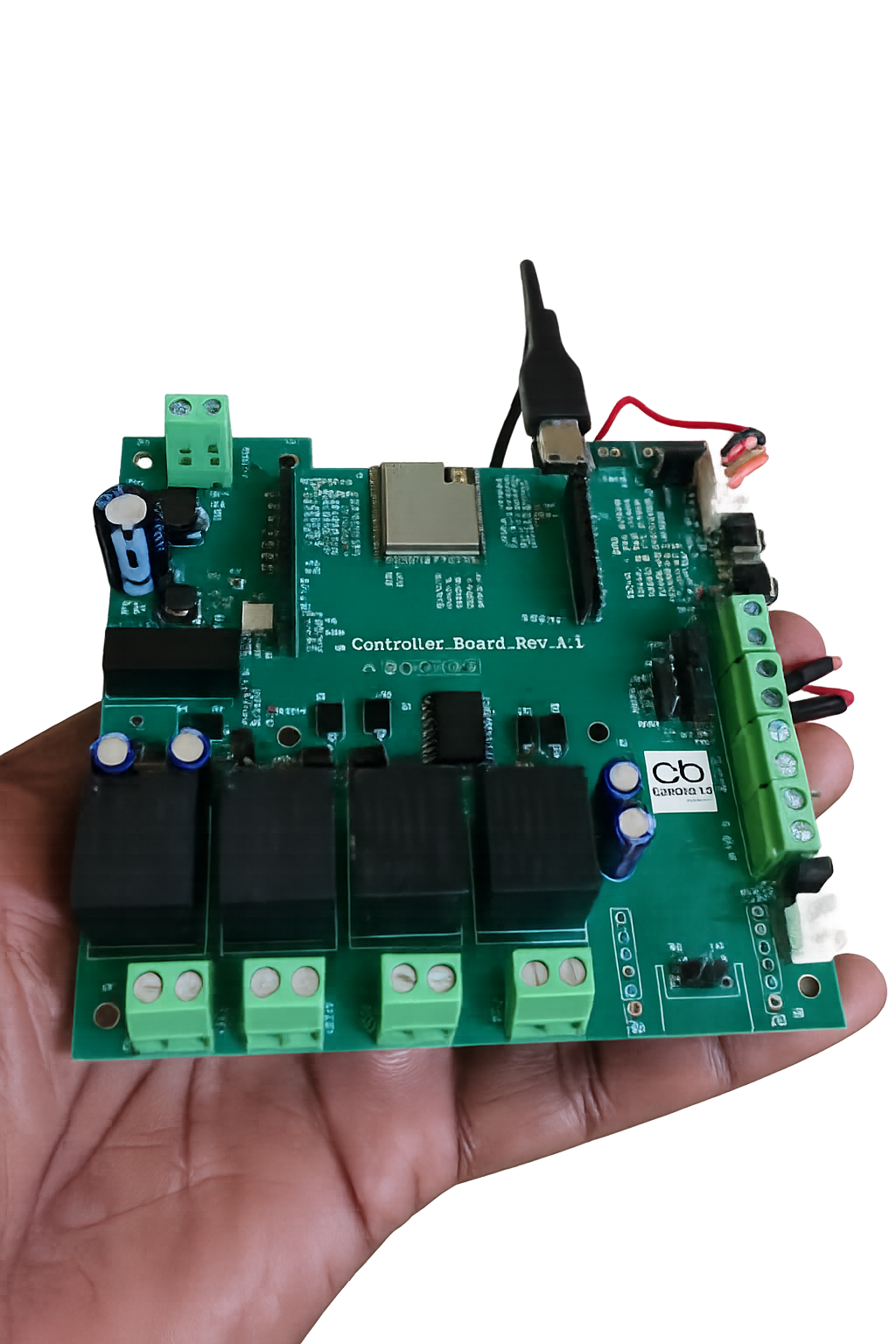
The layered approach based firmware development provides easily portable modular firmware to different type of controllers, easily manageable. We provides comprehensive documentation for your code, detailing functions, variables, classes, and modules, making it easier to understand and maintain the firmware project by providing readily accessible information directly from the code itself.
We use rapid prototyping techniques to create more robust products and devices, minimizing false starts. By adopting an incremental development approach, we explore and test innovative solutions. With our expertise in both software and hardware, we optimize hardware resources, designing solutions that focus on memory efficiency and power savings.
We offer innovative Embedded Software Solutions across a wide range of industries, including:
Architecture
Our firmware is built in clearly separated layers — each independently testable, portable across hardware, and maintainable long after handover.
Our Process
We move from platform review to production-ready firmware in a short, structured delivery flow that keeps architecture, testing, and handover aligned.
MCU or MPU selection, interfaces, constraints, safety expectations, and software scope are mapped before implementation starts.
We define layering, drivers, RTOS needs, communication paths, and module boundaries to keep the codebase maintainable.
Drivers, middleware, application logic, and hardware integration are built and validated together on target hardware.
Testing, optimization, release packaging, documentation, and knowledge transfer are completed before delivery closeout.
Every engagement ends with a fully documented, production ready handover source code, binaries, test evidence, and architecture documentation your team can own and maintain independently.
Git-versioned source code, compiled .hex/.bin/.elf binaries, flashing scripts for production line use, and an OTA/DFU update agent where applicable.
Memory map, interrupt priority table, peripheral register usage, startup sequence, HAL API reference, and task/IPC configuration guide for long-term maintainability.
Static analysis (MISRA/CERT C), hardware-in-loop test logs, WCET timing analysis, stack watermark data, power consumption measurements, and release sign-off reports.
Code walkthroughs, production bring-up assistance, post-delivery bug fixes, hardware migration support, and IP fully transferred — your team is never blocked after handover.
Our commitment to quality extends beyond functionality. Every firmware we build undergoes rigorous optimization, static analysis, and compliance validation ensuring industrial-grade reliability, safety, and performance.
Optimized firmware architecture focusing on task scheduling, interrupt latency, and power efficiency — fine-tuned for real-time performance and stability.
Automated analysis using Cppcheck and Clang-Tidy, plus runtime diagnostics to catch stack issues, race conditions, and memory leaks before deployment.
Firmware developed under MISRA C:2012, CERT C, and Barr Group guidelines — clean, safe, and maintainable code for global compliance.
Quality You Can Trust: Every firmware release passes through multi-stage testing and code validation, ensuring long-term reliability for mission-critical products.
Turn your Idea Into Reality Today
Discuss Your Embedded Software Project